
At a Glance
Claustrophobia is driven by learned experiences, trauma, genetics and heightened brain threat responses, particularly involving the amygdala and hippocampus. It alters perception and triggers physical panic symptoms in confined spaces. Addressing the underlying subconscious associations, rather than just symptoms, through approaches like hypnotherapy can reduce anxiety and retrain the brain’s response to perceived confinement. Contact Susannah for hypnotherapy for claustrophobia.
What Causes the Fear of Confined Spaces?
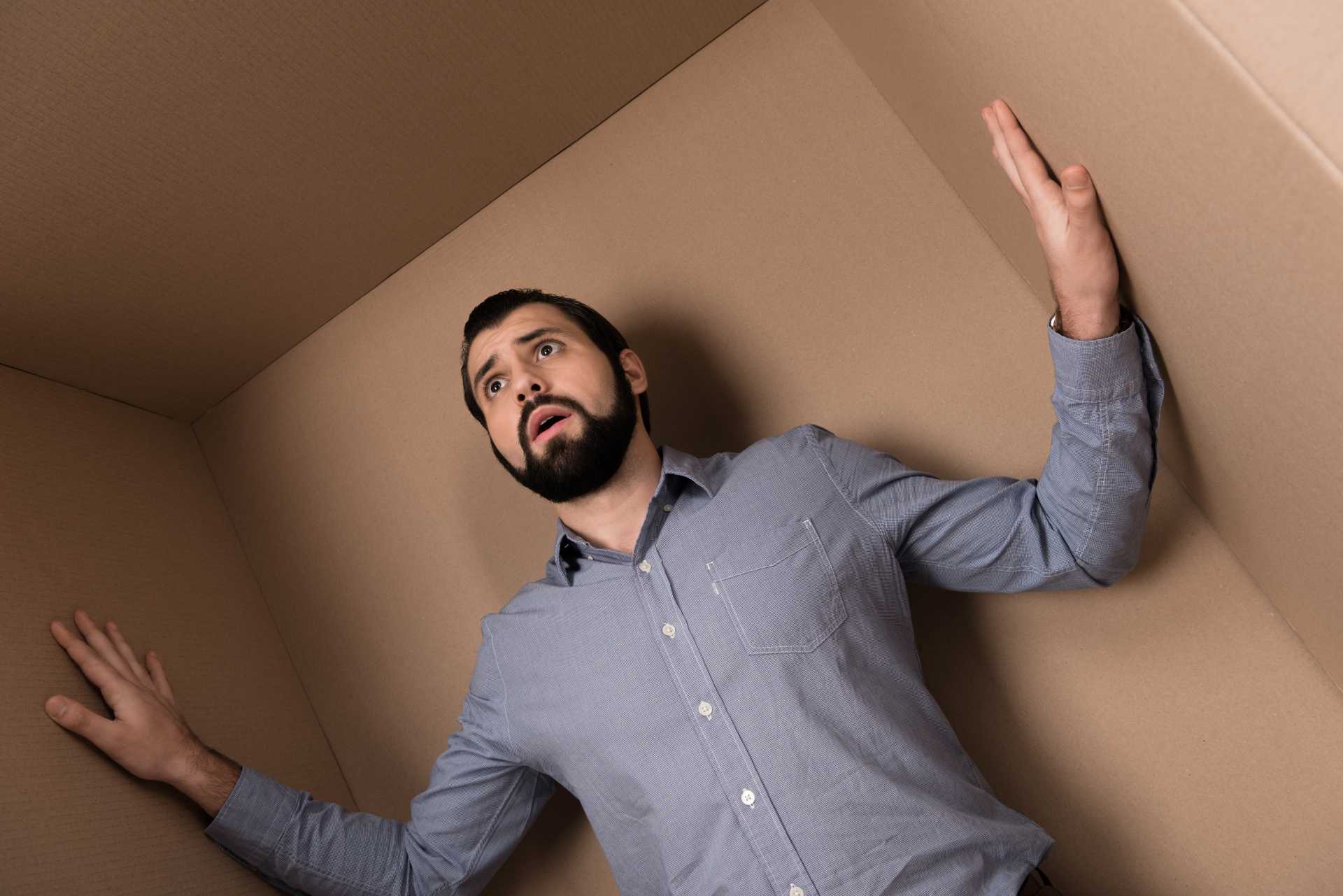
Claustrophobia is an intense, irrational fear of confined or enclosed spaces, often triggering anxiety or panic attacks. Affecting roughly 7.7 to 12.5% of people, it stems from a fear of restriction or being trapped rather than the space itself. Common triggers include lifts, tunnels, planes, trains and small or crowded rooms.
If you experience anxiety in small spaces, you know it’s not rational. You understand the lift probably won’t get stuck, but knowing this doesn’t stop the panic. Claustrophobia affects your life in ways other people don’t always understand – you might avoid medical scans, turn down job opportunities, or feel embarrassed when you need to leave claustrophobic spaces suddenly. Understanding what causes the fear of confined spaces can be the first step towards managing it.
This guide explores claustrophobia in detail, the neuroscience behind it and how hypnotherapy can help in overcoming this phobia.
Understanding Claustrophobia
Primary causes of claustrophobia include:
Childhood Traumatic Events
Early experiences, such as being trapped in a small space, getting lost in a crowd, or being locked in a closet or room, can trigger long-lasting phobias. Your brain files these experiences as dangerous and continues responding to similar situations decades later.
Learned Behaviour
Children may develop a fear of confined spaces by watching a parent or sibling react with intense anxiety to claustrophobic environments. If you grew up seeing someone panic in lifts or refuse to go into small rooms, you might have learned that these spaces are threatening.
Traumatic Adult Experiences
Being stuck in a lift, tube, plane, or crowded room can trigger the onset of claustrophobia later in life. Even one frightening experience in a claustrophobic environment can create a lasting fear response.
Perception of Personal Space
People have different near-space requirements. If your personal space is encroached upon, it can trigger a fight-or-flight response, leading to anxiety in small spaces. What feels fine to someone else might feel suffocating to you.
Genetics
Some research suggests a potential genetic link, such as a mutation in the GPM6A gene, which may increase susceptibility to anxiety disorders, including the fear of confined spaces.
Underlying Psychological Factors
A fear of losing control or having a panic attack in a place where escape is difficult often maintains or triggers the phobia. The anxiety becomes self-perpetuating because you’re afraid of being afraid in claustrophobic spaces.
When Small Spaces Feel Smaller Than They Are
One strange aspect of the fear of confined spaces is that your perception of space can change based on your anxiety level. A room that feels fine when you’re calm can suddenly feel much smaller when panic sets in.
When you’re experiencing anxiety in small spaces, your brain exaggerates the threat. That claustrophobic environment genuinely feels more confining than it objectively is. Your visual perception can narrow, making walls feel closer and exits feel further away.
Time distortion happens, too. Minutes in a claustrophobic space can feel like hours when you’re panicking. A short tube journey might feel endless if you’re struggling with the fear of confined spaces.
Some people report feeling as if the walls are closing in or the ceiling is lowering, even though logically they know this isn’t happening. This isn’t imagination. It’s your brain’s threat response altering your perception of the claustrophobic environment.
The anticipation can be as bad as the experience. If you know you’ll be in a claustrophobic space later, anxiety in small spaces can start building hours or even days beforehand. By the time you’re actually in the situation, your nervous system is already in overdrive.
Exploring the Neuroscience Behind Claustrophobia
Understanding what causes fear of confined spaces involves looking at how your brain processes threats.
Your amygdala is the part of your brain responsible for detecting danger and triggering fear responses. In people with claustrophobia, the amygdala becomes hyperactive in claustrophobic environments – it perceives the confined space as a genuine threat to your survival.
This isn’t a conscious choice as your amygdala operates automatically, below the level of conscious thought. It reacts to claustrophobic spaces before your logical brain has time to assess whether there’s actual danger.
The hippocampus stores memories, including memories of past experiences in claustrophobic environments. If you’ve had a bad experience in a confined space, your hippocampus files this as important survival information. The next time you encounter a similar situation, your brain retrieves that memory and triggers anxiety in small spaces as a protective measure.
Sometimes the original triggering event isn’t even remembered consciously. You might have been stuck in a small space as a child or experienced something frightening in a claustrophobic environment, but have no conscious memory of it. Your amygdala and hippocampus remember, though, and continue responding as if that threat still exists.
The prefrontal cortex is involved in rational thought and emotional regulation. In claustrophobia, this part of your brain struggles to override the fear signals coming from the amygdala. You might consciously know the fear of confined spaces is irrational, but your prefrontal cortex can’t calm the panic your amygdala is generating.
Brain imaging studies show that people with claustrophobia have different activation patterns when viewing images of claustrophobic spaces compared to people without the phobia. Their brains light up in threat-detection areas even when just looking at pictures, not actually being in a confined space.
The vestibular system, which controls balance and spatial orientation, may play a role too. Some research suggests people with a fear of confined spaces have differences in how their brains process spatial information in claustrophobic environments.
Why Confined Spaces Trigger Panic and the Body’s Reaction
When you’re in a claustrophobic environment, your body’s stress response activates. This is the same fight-or-flight response that would activate if you were facing genuine danger.
Your sympathetic nervous system kicks in, releasing adrenaline and cortisol. These stress hormones prepare your body to either fight the threat or run from it. But in a claustrophobic space, you often can’t do either, which intensifies the panic.
Physical symptoms of anxiety in small spaces include rapid heartbeat, shortness of breath, sweating, trembling, dizziness, nausea, chest tightness, hot flushes and feeling detached from reality.
These symptoms aren’t pleasant, but they’re not dangerous. They’re your body’s way of preparing to escape the claustrophobic environment. The problem is that they feel so intense that they can trigger even more panic about the physical sensations themselves.
Hyperventilation is common during panic in claustrophobic spaces. When you breathe too quickly, you exhale too much carbon dioxide, which can cause tingling, dizziness, and a feeling of unreality. This makes the fear of confined spaces worse because you feel like something is seriously wrong.
Your muscles tense up, ready for action. In a claustrophobic environment where you can’t move freely, this tension has nowhere to go. You might feel restless, fidgety, or have an overwhelming urge to escape.
The fight-or-flight response also shuts down non-essential functions. Your digestion slows, your mouth goes dry, and your pupils dilate. These are all normal responses to perceived threat, but they add to the discomfort of being in claustrophobic spaces.
After the panic subsides, you’re often left exhausted. The adrenaline crash can leave you feeling drained, shaky, and emotionally fragile. Some people feel embarrassed about their reaction to the claustrophobic environment, which can make them even more anxious about future situations.
How Hypnotherapy Helps Overcome this Phobia
Hypnotherapy for the fear of confined spaces works by accessing the subconscious part of your mind, where the amygdala and hippocampus store the associations between claustrophobic environments and danger.
In sessions, we use your brain’s natural ability to enter a relaxed, focused state where your subconscious becomes more accessible. This allows us to work directly with the fear response rather than just trying to manage symptoms of anxiety in small spaces.
We can help your brain recategorise claustrophobic spaces from threat to neutral. If your amygdala has learned that confined spaces equal danger, we can teach it that most claustrophobic environments are actually safe. This isn’t about convincing yourself logically. It’s about changing the automatic response at a subconscious level.
For people whose fear of confined spaces stems from a past traumatic experience, hypnotherapy can help reprocess that memory. We don’t need to discuss the details of what happened. The work happens at a subconscious level, helping your brain separate the past event from current situations so you’re not reliving that fear every time you encounter a claustrophobic environment.
Hypnotherapy can also strengthen your ability to calm your nervous system when anxiety in small spaces starts to build. We can rehearse being in claustrophobic spaces while feeling calm and safe. Your brain learns new neural pathways so that confined spaces don’t automatically trigger panic.
Many people find that what to do for claustrophobia becomes clearer after hypnotherapy because their baseline anxiety is lower. The techniques you might have tried before, like breathing exercises or gradual exposure, often work better once the subconscious fear response has been addressed.
We can work on specific triggers, too. If lifts are fine but the tube terrifies you, we can focus the hypnotherapy on that particular claustrophobic environment. The approach is tailored to your specific experience of the fear of confined spaces.
Some people notice changes quite quickly. You might find yourself getting into a lift without thinking about it, or feeling only mild discomfort in a claustrophobic space that would previously have triggered severe panic. For others, the progress is more gradual, with anxiety in small spaces decreasing over several sessions.
The Benefits of Claustrophobia Hypnotherapy with Susannah
Working on the fear of confined spaces through hypnotherapy means addressing the root cause rather than just managing symptoms.
Hypnotherapy retrains your mind to respond differently to claustrophobic environments. We work on reprogramming the subconscious beliefs and automatic responses that trigger anxiety in small spaces. This isn’t exposure therapy. You don’t need to put yourself in situations that terrify you. We deal with the limiting beliefs that created the fear of confined spaces in the first place.
When you’re no longer controlled by anxiety in small spaces, practical aspects of life become easier. You can have medical scans when you need them, use lifts without planning escape routes, and travel on planes or trains without panic. These might seem like small things, but they significantly improve the quality of life.
The confidence that comes from overcoming claustrophobia extends beyond just claustrophobic environments. Many people find that learning what to do for claustrophobia through hypnotherapy also helps them manage other anxieties. You’ve proven to yourself that your brain can update its programming.
Hypnotherapy for the fear of confined spaces is personalised to you. We work on rewiring the subconscious responses that trigger panic, helping your mind learn new ways of perceiving claustrophobic spaces.
Book directly through my website, or get in touch if you’d like to speak first – I offer a free initial phone consultation.